Epicanthoplasty vs. Lower Blepharoplasty: Clarifying Inner Corner Shaping vs. Under-Eye Rejuvenation
When navigating the world of periorbital cosmetic surgery, it is common to feel overwhelmed by the sheer number of highly specialized terms. Two procedures that frequently cause confusion for international patients are epicanthoplasty and lower blepharoplasty. Because both treatments focus on the tissues surrounding the lower and inner sections of the eye frame, they are occasionally mistaken for one another.
In reality, these two surgeries share almost nothing in common when it comes to their surgical objectives, target structures, or functional outcomes. One is a precise reshaping procedure that alters the architectural opening of the inner eye, while the other is an anti-aging restoration designed to smooth out under-eye contours.
The Structural Split: Opening the Inner Frame vs. Smoothing the Lower Valley
Understanding the core differences between these procedures requires looking at the specific anatomical tissue each surgery is designed to modify:
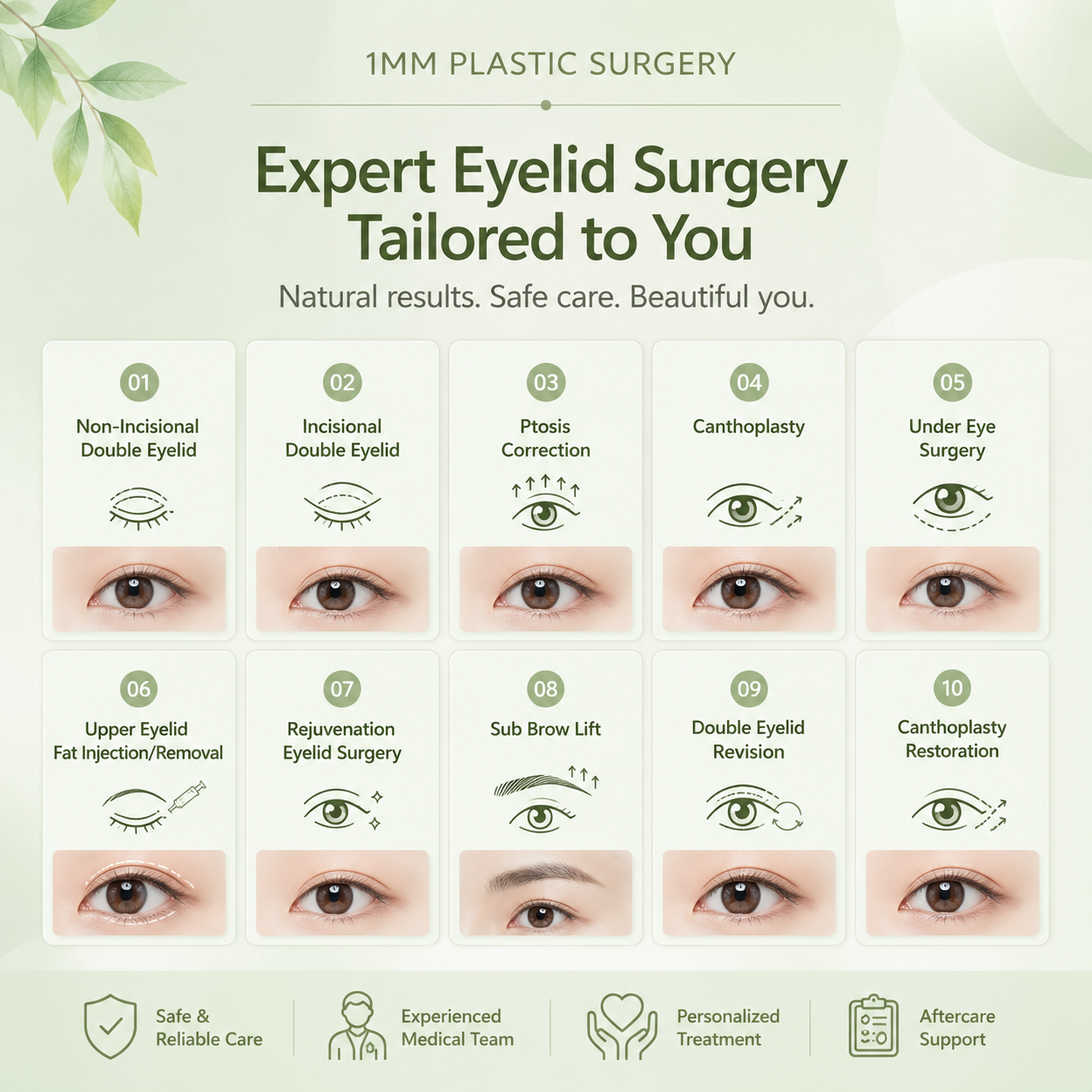
- Epicanthoplasty: This is a shape-modifying, structural procedure performed on the epicanthal fold, which is the small web of skin that covers the inner corner of the eye. It is a popular option among individuals with East Asian eye features who wish to uncover the hidden inner corner, making the eyes appear larger and wider.
- Lower Blepharoplasty: This is an anti-aging, volume-restoring procedure performed on the tissue completely beneath the eye frame. Its main purpose is to eliminate structural fatigue by shifting or removing protruding eye bags and smoothing out dark, sunken tear troughs. It updates your overall resting expression without changing your natural eye shape.
Comparing Anatomy, Placement, and Surgical Approaches
The technical execution of these procedures differs across every step of the planning phase, from where the surgeon places the entry incisions to how the surrounding tissue behaves:
- Epicanthoplasty Placement: The surgical zone is situated at the innermost corner of the eye frame, closest to the bridge of your nose. The surgeon performs micro-incisions to meticulously redirect the skin folds, release tight internal tension lines, and expose the red tear caruncle.
- Lower Blepharoplasty Placement: The surgical zone is entirely below the lower lash line. For most patients, it involves an internal, transconjunctival incision hidden completely inside the lower eyelid. There are zero external cuts on the face, and the primary tissue handled is the deep orbital fat pockets that protrude with age.
The Post-Operative Healing and Recovery Paths
Because these surgeries involve completely different incision sites and tissue depths, your recovery timeline and post-op care will vary based on the procedure you choose:
- Epicanthoplasty Recovery: Because this procedure involves micro-incisions on the delicate surface skin at the inner corner of the eye, ultra-fine external stitches are placed and must be removed after 5 to 7 days. Initial pinkness around the incision line peaks in the first two weeks but fades into an invisible skin tone within 1 to 3 months.
- Lower Blepharoplasty Recovery: When performed using the internal transconjunctival approach, there are no external stitches to remove, allowing you to wash your face and apply makeup almost immediately. Deep internal swelling and minor bruising peak around day 3 and typically smooth out completely within 10 to 14 days as the repositioned fat settles.
The Synergy of Combined Periorbital Restructuring
While they address completely different anatomical concerns, many international patients choose to undergo both procedures simultaneously to maximize their facial transformation:
- Creating a Balanced Eye Frame: Pairing an epicanthoplasty with a lower blepharoplasty addresses both the shape and the youthfulness of your eyes in a single session. Uncovering the inner corner widens the eye horizontally, while smoothing out the under-eye bags eliminates the tired shadow beneath it, creating a dramatically brighter and more energetic gaze.
- Streamlining Your Medical Travel: Undergoing these surgeries together is highly efficient for medical tourists visiting Seoul. It unifies your recovery timeline into a single one-week window, minimizes the overall use of local anesthesia, and reduces the number of post-operative clinic visits required before your flight home.
The Financial Outline: Investment Guidelines in Seoul
South Korea’s specialized medical hubs offer clear, distinct pricing structures for inner corner shaping versus lower under-eye restoration:
- Standard Epicanthoplasty: The cost for an inner corner modification typically ranges from $1,000 USD to $1,800 USD (approximately KRW 1,300,000 to 2,500,000).
- Under-Eye Fat Repositioning (Lower Blepharoplasty): The internal, scarless procedure to shift under-eye fat into dark circles ranges from $1,500 USD to $2,600 USD (approximately KRW 2,000,000 to 3,500,000).
- Advanced Lower Blepharoplasty with Skin Excision: When fat repositioning must be paired with external skin tightening to fix severe sagging, the range shifts to $2,600 USD to $4,500 USD (approximately KRW 3,500,000 to 6,000,000).
- Tax Refund Savings: International patients visiting certified clinics in Seoul receive an instant value-added tax (VAT) refund of 7% to 10% at check-out, lowering overall medical travel expenses.
Why Seoul is the Global Destination for Both Procedures
Global patients consistently travel to South Korea for both treatments due to the advanced, preservation-focused techniques perfected by Seoul's surgeons:
- The Evolution of Redirection Epicanthoplasty: Historically, older inner-corner surgeries left noticeable, red scars right on the bridge of the nose. Korean specialists pioneered advanced redirection and hidden incision methods, moving the tiny scar lines into the natural shadow of the inner eye frame where they become completely invisible after healing.
- Pioneers of Volume Preservation: While many traditional practices rely on older, aggressive fat excision techniques that can leave the under-eye looking hollow, Seoul’s surgeons focus heavily on internal fat repositioning. They shift your own natural fat to smooth out dark shadows, preserving essential volume for a youthful look.
- Specialized Oculoplastic Experts: Medical facilities in districts like Gangnam feature dedicated oculoplastic surgeons who focus exclusively on the periorbital zone, performing thousands of specialized procedures annually to ensure maximum safety, facial symmetry, and precision.
Final Thoughts
Clarifying the difference between epicanthoplasty and lower blepharoplasty is an essential step toward planning a successful facial rejuvenation journey. If your primary goal is to lengthen horizontally narrow eyes, expose a hidden inner corner, and create a wider, more open gaze, an epicanthoplasty is your correct path. If your goal is to eliminate tired under-eye bags, fill in deep tear troughs, and erase dark shadows, a lower blepharoplasty is the exact solution you need. Consulting with a board-certified oculoplastic specialist in Seoul will ensure your unique facial structure is accurately evaluated, leading to a balanced, beautiful, and completely natural result.