July 7, 2026

The VIP Treatment: Premium Recovery Suites in Seoul vs. Standard Outpatient Care Globally

When planning a cosmetic or reconstructive procedure, patients frequently focus almost entirely on the operation itself. However, the immediate post-operative period is just as critical to the final aesthetic outcome. This is where the structural gap between the South Korean medical model and Western healthcare systems becomes strikingly apparent.

Globally, the standard protocol for elective cosmetic procedures is standard outpatient care—discharging patients almost immediately after they wake up from anesthesia to manage their early recovery at home or in a standard hotel room. In stark contrast, Seoul’s elite medical districts have pioneered an all-inclusive ecosystem centered around Premium Recovery Suites. This model treats post-operative care not as an afterthought, but as an active, high-tech phase of the surgical journey.


The Structural Contrast: Seoul VIP Suites vs. Global Outpatient Care

The fundamental difference lies in the level of clinical oversight, technology, and specialized physical support available to the patient during the fragile first week of healing.

  • Global Standard Outpatient Care: In most Western countries, patients undergoing significant facial or body contouring are discharged within hours of surgery. The burden of monitoring for fluid accumulation, managing complex medication schedules, and cleaning delicate incision lines falls entirely on the patient or an untrained family member. If a minor complication or severe swelling occurs, the patient must navigate emergency room visits or wait for phone callbacks.
  • Seoul’s Premium Recovery Suites: In Seoul, top-tier institutions provide an immersive, specialized environment. Patients transition directly from the operating theater into minimalist, luxury private suites equipped with continuous medical monitoring. Rather than isolating the patient, a dedicated team of bilingual nurses, in-house anesthesiologists, and clinical specialists manage the recovery environment 24/7, catching minor physiological shifts before they can impact the surgical result.


Inside Seoul’s High-Tech Deswelling & Healing Ecosystem

Seoul’s premium recovery suites stand out due to their integration of specialized, medical-grade recovery technologies designed to accelerate tissue regeneration and instantly minimize downtime:

  • Hyperbaric Oxygen Therapy (HBOT): This system floods the blood plasma and damaged tissues with 100% pure oxygen under increased atmospheric pressure. This intensive cellular loading speeds up internal tissue repair, significantly reduces early bruising, and halves the initial healing timeline.
  • Smart Near-Infrared & LED Light Therapy: These automated panels emit deep-penetrating light wavelengths directly over the surgical zones to stimulate mitochondrial activity and localized blood flow. This active stimulation rapidly dissolves acute post-surgical swelling and promotes smooth collagen remodeling along incision lines.
  • Professional Lymphatic Drainage: Specialized medical aesthetic staff perform gentle, targeted facial and cervical lymphatic drainage massages. This process flushes out trapped post-op fluids, completely preventing early tissue hardness and restoring natural facial contours much faster than passive resting.
  • In-House Therapeutic Salons: Dedicated clinical washing stations are available where staff provide professional hair and scalp care. This luxurious service allows facial surgery patients to stay perfectly clean and comfortable without risking accidental water damage to fresh incisions, stitches, or face bandages.


Bespoke Nutritional Care: Tailored Post-Op Menus

In Western outpatient recovery, patients often rely on convenient, sodium-heavy delivery foods that can inadvertently worsen post-surgical swelling. Seoul’s VIP recovery suites treat nutrition as a precise medical tool.

  • Targeted Anti-Inflammatory Menus: Patients are provided with chef-curated meals specifically engineered to maximize wound healing. These menus emphasize pumpkin and red bean infusions—traditional Korean remedies scientifically recognized for their natural diuretic properties that flush excess fluids from the body.
  • Soft-Food Architecture: For patients undergoing facial contouring or orthognathic (jaw) surgery, standard meals are impossible. In-house nutritionists design specialized, high-protein liquid and micro-pureed diets that deliver optimal caloric intake without putting strain on healing bone or muscle structures.


Privacy, Security, and Seamless Medical Concierge Systems

For international patients, public figures, and high-net-worth individuals, premium aftercare in Seoul offers complete discretion alongside logistical support.

  • Anonymity and Private Routing: Premium recovery wings feature secured, private entrances and dedicated elevators. This layout allows patients to move between their suites, consultation rooms, and high-tech aftercare treatment blocks without ever passing through public waiting areas.
  • Bespoke Concierge Integration: The premium suite experience includes a dedicated bilingual medical coordinator. This specialist acts as your personal advocate—managing pharmacy pickups, translating direct daily feedback from your chief surgeon, coordinating airport transfers, and handling the paperwork required for medical tax refunds.


Final Thoughts

The traditional global outpatient model places a heavy physical and mental burden on the patient during their most vulnerable moments. Seoul’s premium recovery suites redefine this journey by transforming recovery into a highly organized, luxurious extension of the surgical procedure itself.

By combining around-the-clock medical oversight with advanced deswelling technologies, customized nutrition, and complete privacy, South Korea ensures that your body heals under absolute optimal conditions. Choosing a premium aftercare ecosystem means removing the anxiety, guesswork, and physical strain from your recovery, shielding your investment, and clearing a seamless path toward a flawless, rapid result.

July 8, 2026
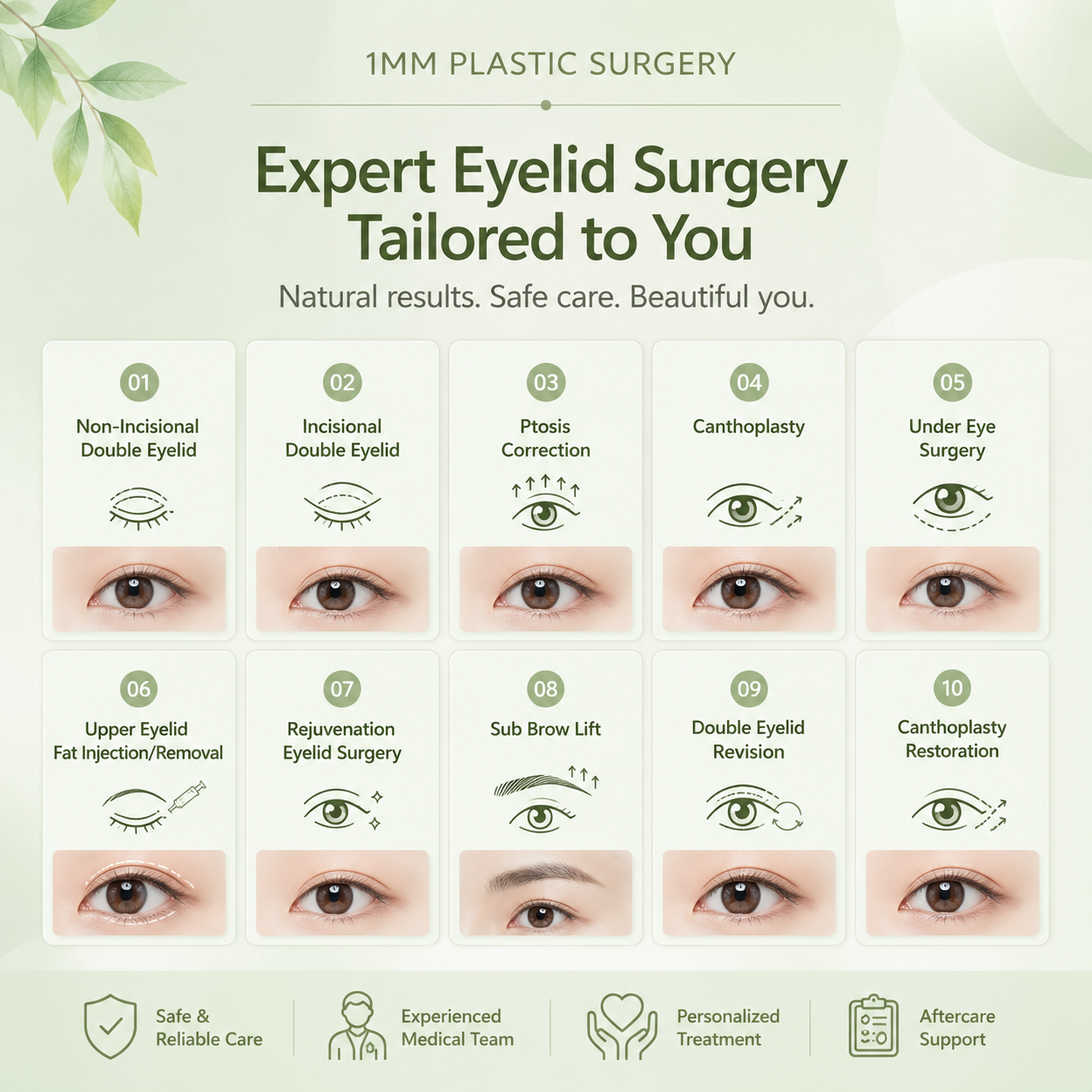
When the upper eyelids begin to heavy and sag, it can drastically alter your entire appearance, making you look constantly tired, stern, or older than you feel. To correct this, most patients instantly look into a standard upper blepharoplasty. However, they are often surprised when an experienced specialist introduces a completely different option: the sub-brow incision lift. If your primary goal is to clear away sagging skin above the eye frame, choosing the wrong surgical pathway can lead to a harsh, surprised, or unnaturally thick eyelid appearance. Understanding how a sub-brow lift directly compares to upper and lower blepharoplasties ensures you select the exact architectural fix your face requires. Upper Blepharoplasty: Building the Crease from the Lash Line An upper blepharoplasty is a localized procedure that targets tissue changes directly within the movable canvas of the upper eyelid itself. The Mechanism: The surgeon makes an incision along the natural crease line of your upper lid, roughly 5 to 7 millimeters above your eyelashes. Through this opening, a horizontal strip of loose eyelid skin is removed, and any small, herniated fat pockets are trimmed or repositioned. The Structural Result: This procedure is ideal for creating or redefining a clean, sharp eyelid crease. It focuses entirely on clearing away the skin that drapes directly over the eyelashes, effectively un-hooding the eye frame and restoring a bright, open gaze. Sub-Brow Incision Lift: Lifting the Canopy from Above A sub-brow incision lift approaches the problem from a higher architectural standpoint, focusing on the heavy, thick skin situated just below the eyebrow line. The Mechanism: The surgeon places an incision tightly against the lower border of your eyebrow hair. A precise wedge of excess skin and underlying tissue is excised from this high position, and the remaining skin is anchored upward to the firm covering of the brow bone. The Structural Result: Instead of pulling skin from the lash line, this method hoists the heavy, drooping canopy of the upper brow area. Because it lifts from above, it clears away the hooded, sagging outer corners of the eyes while leaving your natural, original eyelid crease completely unaltered. Direct Comparison: Analyzing Tissue Thickness and Goals The choice between a sub-brow lift and an upper lift comes down to a crucial anatomical detail: the thickness of your skin: The Skin Thickness Factor: Eyelid skin gets progressively thicker as it moves away from the eyelashes up toward the eyebrow. If a patient with severe hooding undergoes a standard upper blepharoplasty, the surgeon must pull that thick, heavy brow skin all the way down to the lash line to close the incision. This often results in a bulky, puffy, and unnaturally thick eyelid fold. The Sub-Brow Solution: A sub-brow lift solves this issue by removing the heavy, thick skin directly under the eyebrow where it originates. It preserves the ultra-thin, delicate skin near the eyelashes, resulting in a remarkably soft, light, and authentic eye appearance. The Role of Lower Blepharoplasty: A lower blepharoplasty operates on an entirely separate track, smoothing out under-eye bags and tear troughs below the eye. While it does not fix upper drooping, it is frequently combined with either an upper lift or a sub-brow lift during a single session to achieve total, balanced periorbital harmony. The Financial Outline: Investment Guidelines in Seoul Pricing for periorbital lifting and contouring in South Korea’s premium medical hubs depends directly on the surgical complexity and tissue handling required: Sub-Brow Incision Lift: This advanced brow-line excision protocol ranges from $1,800 USD to $3,200 USD (approximately KRW 2,400,000 to 4,300,000). Standard Upper Blepharoplasty: A classic upper eyelid crease adjustment ranges from $1,500 USD to $2,800 USD (approximately KRW 2,000,000 to 3,700,000). The Upper & Lower Combination Protocol: Combining an upper rejuvenation procedure with a lower under-eye fat repositioning ranges from $2,800 USD to $4,500 USD (approximately KRW 3,700,000 to 6,000,000). Instant Tax Refunds: International medical travelers visiting certified facilities in Seoul qualify for a 7% to 10% cash tax refund at check-out, reducing overall out-of-pocket expenses. Why Seoul is the Global Destination for Periorbital Lifting International patients consistently choose South Korea for advanced upper eye rejuvenation due to the highly specialized, preservation-focused techniques perfected by Seoul's surgeons: Mastery of Hidden Sub-Brow Scarring: Korean surgeons use an ultra-precise, beveled incision technique when performing sub-brow lifts. By cutting at an angle directly beneath the hair follicles, the brow hairs grow back right through the matured scar line, completely hiding the trace of surgery. Prevention of the Artificial "Done" Look: While aggressive surgical approaches can leave patients looking perpetually startled or unnatural, Seoul’s oculoplastic specialists focus on conservative tissue removal to fully maintain your original eye shape and natural expressions. Integrated Rapid Recovery Care: Medical districts like Gangnam offer advanced post-operative recovery infrastructure—including localized infrared deswelling therapies and specialized lymphatic treatments—to quickly minimize bruising and safely accelerate your return to normal activities. Final Thoughts Resolving upper eyelid drooping beautifully requires identifying the true source of your heavy appearance. If you are younger, have thin eyelid skin, or want to create a crisp new double eyelid crease, a standard upper blepharoplasty is an exceptional option. However, if your drooping is driven by heavy, thick skin descending from the brow line, a sub-brow incision lift is the superior choice. It clears away the heavy canopy, hides the scar perfectly beneath your brow hairs, and preserves your soft, natural expression. Consulting with a dedicated oculoplastic expert in Seoul will help you chart the perfect path to a bright, refreshed, and completely natural gaze.
July 8, 2026
When looking closely at the lower eye area, it is easy to confuse different surgical solutions. Many people seek a brighter, more refreshed appearance but are unsure whether their primary issue is structural volume or the physical shape and slant of the eye itself. Distinguishing between lower blepharoplasty and canthoplasty is essential, as one addresses aging tissue while the other alters structural architecture. Choosing the wrong procedure can lead to an unnatural appearance, making it crucial to understand how each method interacts with your unique anatomy. Lower Blepharoplasty: Restoring Volume and Smoothing the Contour Lower blepharoplasty focuses strictly on the rejuvenation of the lower eyelid tissue, targeting signs of aging rather than altering your underlying features: The Mechanism: The surgeon addresses structural aging by targeting herniated fat, deep tear troughs, and loose skin below the lower lashes. This is accomplished either through an internal incision inside the eyelid (transconjunctival) to adjust fat pads, or an external subciliary incision if sagging skin must be removed. The Structural Benefit: This procedure eliminates the tired look caused by heavy under-eye bags and dark shadows. By leveling the uneven surface and creating a smooth, flat plane between the lower lid and the upper cheekbone, it restores a naturally youthful resting expression without altering your core features. Canthoplasty: Adjusting the Axis and Tension of the Eye Corner Canthoplasty is a structural reshaping procedure that alters the position, angle, and tightness of the outer corner of the eye (the lateral canthus): The Mechanism: The surgeon cuts, repositions, and firmly anchors the lateral canthal tendon to the bony orbital rim of the skull. This physically shifts the point where the upper and lower eyelids meet at the outer corner. The Structural Benefit: This method is designed to modify the fundamental tilt and shape of the eye. It can correct a downward-sloping outer corner to create a more lifted look, widen short eyes horizontally, or stabilize a weak, drooping lower eyelid that is pulling away from the eyeball. Anatomical Suitability: Identifying Your Primary Needs Determining which procedure is right for you depends on whether your goals are related to tissue aging or the physical shape of your eyes: Lower Blepharoplasty Suitability: This method is ideal for individuals dealing with pronounced under-eye bags, structural shadowing, and crepey, loose skin beneath the eye. It is designed purely for anti-aging restoration and does not change your natural eye shape. Canthoplasty Suitability: This method is best for individuals who want to fix drooping outer eye corners, widen horizontally narrow eyes, or correct structural eyelid laxity. Its primary focus is altering the shape, tilt, and structural support of the eye frame. Combined Approach: In many cases of advanced aging, a lower blepharoplasty is paired with a conservative canthoplasty. This combined strategy allows the surgeon to remove under-eye bags while simultaneously tightening a loose lower eyelid track, preventing the lid from rolling outward after skin removal. The Financial Outline: Investment Guidelines in Seoul South Korea's specialized aesthetic centers maintain distinct pricing models for lower eye procedures based on the structural approach required: Standard Lower Blepharoplasty: The cost for a standard lower eyelid rejuvenation involving fat adjustment ranges from $1,500 USD to $2,600 USD (approximately KRW 2,000,000 to 3,500,000). Canthoplasty (Lateral or Lower): A structural reshaping or tightening procedure at the outer corner generally ranges from $1,200 USD to $2,800 USD (approximately KRW 1,600,000 to 3,700,000). Tax Refund Savings: International patients undergoing these procedures at certified clinics in Seoul qualify for an instant tax refund of 7% to 10% at check-out, lowering overall medical travel expenses. Why Seoul is the Global Destination for Eyelid Surgery Medical travelers consistently choose South Korea for lower eye adjustments due to the highly refined techniques and meticulous execution found in Seoul's medical districts: Advanced Multi-Dimensional Canthoplasty: Korean specialists have moved beyond basic outer-corner incisions. They utilize advanced dual-canthoplasty techniques that lower and widen the eye corner simultaneously, maximizing the opening safely while avoiding the risk of the corner webbing or closing back up during recovery. Natural-Look Anti-Aging Philosophy: Rather than over-tightening skin or aggressively pulling the eye corners into an unnatural shape, Seoul’s surgeons prioritize facial balance. Their techniques focus on preserving natural volume and retaining the soft expression lines that keep the eyes looking authentic. Micro-Suture Precision: Because the skin around the eyes is incredibly thin, surgeons in Seoul use ultra-fine micro-sutures and advanced internal anchoring systems. This approach minimizes post-operative swelling, accelerates tissue healing, and ensures that incisions heal with virtually invisible lines. Final Thoughts Choosing between lower blepharoplasty and canthoplasty comes down to assessing whether you need to smooth out aging skin or structurally alter the frame of your eyes. Lower blepharoplasty is the gold standard for erasing tired under-eye bags and restoring a smooth, youthful contour. Canthoplasty is a precise structural tool designed to lift, widen, or stabilize the outer corners of the eyes. Consulting with a dedicated oculoplastic specialist in Seoul will help you determine if a single approach or a tailored combination will deliver the most balanced, natural result.
July 8, 2026
When looking closely at an aging face, you will notice that under-eye issues are rarely just about simple puffiness. Most people deal with a double dilemma: a bulging protrusion directly under the lashes, immediately followed by a steep, dark hollow right along the upper cheekbone, often called the tear trough. For decades, the standard surgical response to under-eye bags was traditional fat removal. However, modern plastic surgery has shifted toward a more conservative, volume-preserving methodology. Choosing between removing your under-eye fat or repositioning it will entirely dictate how your face ages over the next ten to twenty years. Traditional Eyelid Fat Removal: The High-Volume Extraction Traditional fat removal operates on a simple principle: if a structural pocket is bulging, you cut it out. The Mechanism: The surgeon makes an incision to access the three independent fat pads cushioning the eyeball. The protruding sections of these fat pads are trimmed down to create a flat, flush surface. The Aging Consequence: While this approach effectively flattens severe bags in the short term, it often backfires as you continue to age. The human face naturally loses fat and bone density over time. If a surgeon aggressively removes your under-eye fat, you risk looking hollow, sunken, or skeletonized down the road. Removing too much volume destroys the soft, youthful transition between the lower eyelid and the upper cheek. Under-Eye Fat Repositioning: The Advanced Volume Shift Modern under-eye fat repositioning treats fat as a valuable, finite asset rather than a waste product. The Mechanism: Instead of cutting away and discarding the protruding tissue, the surgeon releases the herniated fat pads and drapes them downward. This fat is meticulously shifted and secured into the empty, sunken valley of your tear trough. The Aging Benefit: This approach solves two distinct structural problems at once: it flattens the upper bulge while simultaneously filling in the lower dark shadow. By preserving your natural tissue and shifting it over the hard orbital rim, the surgeon creates a smooth, continuous, and youthful plane from the eye down to the cheek. Because your natural volume is preserved, your eyes will age much more gracefully and maintain a soft, natural appearance over time. Anatomical Fit: Choosing Your Best Method The right choice depends heavily on your unique facial structure, your age, and the quality of your skin: Traditional Fat Removal Suitability: This method is best for younger patients who experience isolated puffiness and zero hollowing. Its primary goal is flattening severe, isolated bulges, but it carries a higher hollowing risk as facial fat naturally decreases with age. Under-Eye Fat Repositioning Suitability: This method is ideal for patients over 35 who are experiencing both bags and deep tear troughs. It actively preserves and redistributes volume, meaning the risk of a sunken appearance is extremely low. Incision Variations and Skin Laxity: Traditional removal can be external or internal, whereas fat repositioning is usually internal (transconjunctival) with zero visible scars. Neither method automatically tightens loose, crepey skin; if skin sagging is significant, surgeons frequently combine internal fat repositioning with a subtle external skin pinch or laser resurfacing. The Financial Outline: Investment Guidelines in Seoul South Korea’s specialized medical hubs offer clear, distinct pricing structures for lower eyelid rejuvenation based on the complexity of your anatomy: Standard Under-Eye Fat Repositioning: The basic internal, scarless procedure to shift fat into the tear troughs ranges from $1,500 USD to $2,600 USD (approximately KRW 2,000,000 to 3,500,000). Advanced Repositioning with Lower Blepharoplasty: When the fat shifting must be paired with external skin tightening or excess skin removal, the price range shifts from $2,600 USD to $4,500 USD (approximately KRW 3,500,000 to 5,500,000). Tax Refund Savings: International patients visiting certified clinics in Seoul receive an instant tax refund of 7% to 10% at check-out, which significantly lowers out-of-pocket medical travel expenses. Why Seoul is the Global Destination for Under-Eye Rejuvenation Global patients consistently travel to South Korea for under-eye adjustments due to the highly advanced and specialized techniques practiced in the region: Pioneers of Internal, Scarless Techniques: Instead of cutting through the skin outside the eye, Seoul's specialists perfected the transconjunctival approach. By operating entirely inside the lower eyelid, they leave absolutely no visible external scars and dramatically reduce recovery time. Volume Preservation Philosophy: While many Western practices still rely on older, aggressive fat excision techniques, Korean surgeons focus heavily on fat preservation. They understand that maintaining natural facial fat is crucial for retaining a youthful, soft appearance over time. Unrivaled Oculoplastic Expertise: The medical districts in Seoul feature dedicated oculoplastic surgeons who focus entirely on the delicate structures around the eye. These specialists perform thousands of eyelid surgeries every year, ensuring high precision, symmetrical results, and optimal safety. Final Thoughts For the vast majority of patients managing facial aging, under-eye fat repositioning is the superior long-term choice. It addresses the true root cause of an aging look—the uneven distribution of facial volume—rather than just cutting away valuable structural tissue. Traditional fat removal should generally be reserved for unique anatomical cases where there is an excess of fat but absolutely no under-eye hollowing. Consulting with a specialized oculoplastic surgeon in Seoul ensures your treatment plan will protect your facial volume, allowing your eyes to age naturally and beautifully.
July 8, 2026
When international patients begin researching eye rejuvenation or shape enhancement online, they quickly find themselves trapped in a web of dense medical jargon. Terms like "blepharoplasty," "double eyelid surgery," and "lower eyelid lift" are frequently tossed around interchangeably. This leaves many people wondering if these procedures tackle the same anatomical concerns. The confusion stems from a shared root name. While both treatments fall under the technical umbrella of periorbital (around-the-eye) plastic surgery, they serve entirely distinct demographics, target completely opposite structures of the eye frame, and follow entirely separate aesthetic methodologies. The Fundamental Split: Structural Rejuvenation vs. Architectural Creation To understand why these two procedures should never be confused, it helps to look at what each surgery actually builds or alters. One is an anti-aging procedure designed to restore a flat surface, while the other is an architectural procedure designed to create a new facial feature: Lower Blepharoplasty: This is strictly an anti-aging, restorative procedure performed on the tissue beneath the eye frame. Its core purpose is to smooth out structural contours by removing or shifting protruding eye bags and filling in dark, tired valleys. It is a solution for structural fatigue, not a tool for modifying the shape of the eye itself. Double Eyelid Surgery (Asian Blepharoplasty): This is a shape-enhancing, structural procedure performed exclusively on the upper eyelid. It is designed for individuals born without a natural upper fold (monolids). The surgical goal is to create a crisp, permanent crease where skin connects to the deep eye-opening muscle, transforming a flat lid into a dynamic double-eyelid frame. Comparing Anatomy, Placement, and Surgical Approaches The technical execution of these procedures differs across every step of the planning phase, from where the surgeon cuts to how the tissue behaves: Lower Blepharoplasty Placement: The surgical zone is entirely below the lower lash line. For most patients, it involves an internal, transconjunctival entry point hidden completely inside the lower eyelid. There are zero external cuts on the face, and the primary tissue handled is the deep orbital fat pockets that protrude with age. Asian Blepharoplasty Placement: The surgical zone is on the upper eyelid, a few millimeters above the upper eyelashes. It can be performed using a non-incisional (natural adhesion suture) method or a full incisional technique, depending on the thickness of the patient's skin. The primary tissues adjusted are the skin, the levator muscle, and the superficial fat pad above the eye. The Financial Outline: Investment Guidelines in Seoul South Korea’s specialized medical hubs offer clear, distinct pricing structures for upper creation versus lower restoration. The total investment reflects the technical approach selected during your structural consultation: Double Eyelid Surgery (Non-Incisional): The suture-based natural adhesion method for creating an upper crease ranges from $1,000 USD to $1,800 USD (approximately KRW 1,300,000 to 2,500,000). Double Eyelid Surgery (Full Incisional): When skin excision or complex muscle adjustment (ptosis correction) is needed to build the upper crease, the range shifts to $2,000 USD to $4,000 USD (approximately KRW 2,700,000 to 5,500,000). Lower Blepharoplasty: Under-eye fat repositioning to smooth out bags and tear troughs ranges from $1,800 USD to $3,500 USD (approximately KRW 2,400,000 to 4,800,000). Tax Refund Optimization: International patients visiting certified clinics in Seoul receive an instant tax refund of 7% to 10% at check-out, significantly reducing out-of-pocket costs. Why Seoul is the Global Destination for Both Procedures While the objectives of these surgeries are completely different, global patients travel to Seoul for both treatments due to the unparalleled expertise found within the city's medical districts: Mastery over the Asian Monolid: For double eyelid surgery, Korean surgeons have pioneered micro-suture techniques that create soft, natural adhesion folds. They avoid the overly deep, harsh, or artificial-looking creases often produced by Western surgical approaches. Pioneers of Internal Fat Repositioning: Instead of simply cutting away under-eye fat—which can leave the eyes looking hollow and aged—Seoul's specialists pioneered the technique of shifting that fat into lower hollows through invisible, internal incisions. Specialized Oculoplastic Experts: Medical facilities in Gangnam feature dedicated oculoplastic surgeons who focus exclusively on the periorbital zone, completing thousands of eye procedures annually to ensure maximum safety and precision. The Post-Operative Healing and Recovery Paths Because the upper and lower eyelids use entirely different tissue mechanics, your recovery experience will vary based on the procedure you choose: Recovering from Double Eyelid Surgery: If you undergo a non-incisional suture procedure, swelling drops drastically within 3 to 5 days, and there are no stitches to remove. For incisional double eyelid surgery, external threads must remain in place for 5 to 7 days. While initial swelling can make the new crease look unnaturally high or deep, it settles into its permanent, organic position within 1 to 3 months. Recovering from Lower Blepharoplasty: When performed internally, this procedure requires no external stitch removal, making the immediate surface healing much easier. However, because under-eye fat must be mobilized and anchored lower down, deep internal bruising and swelling peak around day 3 and take roughly 10 to 14 days to smooth out completely. Final Thoughts Distinguishing between lower blepharoplasty and Asian blepharoplasty is the first step toward planning a successful medical travel experience. If your goal is to eliminate tired under-eye bags and erase dark circles, a lower blepharoplasty is your correct path. If your goal is to change a flat monolid into an open, double-creased upper eye frame, you are looking for an Asian blepharoplasty. By consulting with highly specialized surgical teams in South Korea, you can ensure that your specific structural needs are precisely met. This focused care delivers a natural, beautifully balanced result that complements your unique facial anatomy.
July 8, 2026
When people discuss eyelid surgery, they often lump the treatments together under the single medical term "blepharoplasty." However, treating the upper eyelids versus the lower under-eye region involves completely different anatomical challenges, aesthetic objectives, and healing patterns. Choosing the right approach requires looking past the shared name and understanding how these two surgical procedures operate independently. While upper eyelid surgery focuses primarily on clearing away heavy, sagging tissue to open up a hooded eye, lower under-eye surgery is designed to smooth out structural contours and eliminate tired shadows. Upper Blepharoplasty: Lifting the Canopy An upper blepharoplasty is a corrective procedure designed to address structural changes that happen above the lash line. Over time, gravity and collagen depletion cause the skin of the upper eyelid to lose its elasticity, leading to a heavy, folding appearance that droops downward over the eye's natural crease. The Primary Goals: The main objective is to clear away this loose, sagging skin drape—and occasionally small pockets of herniated fat—to restore a more awake, youthful, and alert eye shape. For older patients, this surgery is often functional as well as cosmetic, as a severely hooded lid can physically drape over the eyelashes and obstruct the upper field of vision. The Incision and Scar Placement: Because upper eyelid surgery requires removing a horizontal strip of loose skin, an external cut is mandatory. The surgeon places the incision precisely within the natural, organic fold of your eyelid crease. The Scar Profile: While the incision is technically on the outside of the face, it remains completely hidden away from view whenever your eyes are open. As the fine line matures over three to six months, it fades into a faint, practically invisible track that blends seamlessly into your natural skin folds. Lower Blepharoplasty: Smoothing the Foundation A lower blepharoplasty focuses entirely on the architecture beneath the eye frame. Aging in the lower periorbital zone rarely presents as simple skin hooding; instead, it shows up as structural protrusion and deep-set shadowing. The Primary Goals: The objective here is to eliminate under-eye bags and erase the dark, tired valleys known as tear troughs. Rather than simply pulling skin tight, modern lower surgery focus on structural fat repositioning—shifting the bulging fat pockets downward into the adjacent hollows to create a perfectly flat, uniform sweep from the lower lash line down to the cheekbone. The Incision and Scar Placement: Lower blepharoplasty offers a significant structural advantage because it can often be performed using an internal technique called the transconjunctival approach. The surgeon enters through a microscopic incision made completely on the inside of the lower eyelid. The Scar Profile: Because the entry point is fully enclosed within the moist lining of the inner eyelid, there are absolutely zero external scars, stitches, or visible clinical markers left on the surface of your face. If a patient requires an external subciliary approach due to severe skin redundancy, the fine cut is placed tightly against the lower lash line, where it heals exceptionally well and masks itself amid your lower eyelashes. The Surgical Experience and Recovery Profiles Because the structural entry points and tissue handling differ significantly between the two zones, your post-operative healing lifecycle will follow two distinct paths: Upper Blepharoplasty Recovery: This surgery typically takes 45 to 60 minutes and is performed under light local anesthesia or twilight sedation. Fine external sutures are required to close the eyelid crease incision, which must be carefully removed by the clinic team on day 5 or 6. Initial swelling can make the eyelids look tight or uneven for the first week, but social downtime is generally brief, with most patients returning to public activities within 7 days using light concealment. Lower Blepharoplasty Recovery: The lower structural fat reset takes roughly 1 to 1.5 hours and is ideally managed under deeper twilight sedation to ensure absolute patient comfort. When performed internally via the transconjunctival approach, no external stitches are required, drastically simplifying your daily post-op cleaning routine. Swelling and deep bruising tend to peak on day 3 and can take 10 to 14 days to fully clear, as the shifted fat pockets require time to stabilize and establish a permanent blood supply. The Financial Outline: Costs in Seoul's Medical Districts Pricing for periorbital surgery varies depending on whether you address one region or choose to harmonize the entire eye frame simultaneously: Upper Blepharoplasty Investment: A standard upper eyelid crease surgery ranges from $1,500 USD to $2,800 USD (approximately KRW 2,000,000 to 3,700,000), depending on whether muscle tightening or fat removal is required. Lower Blepharoplasty Investment: The structural lower under-eye fat repositioning typically ranges between $1,800 USD and $3,200 USD (approximately KRW 2,400,000 to 4,300,000) due to the delicate nature of internal fat shifting. The Full Periorbital Combo Discount: When performed together as a unified upper and lower reset, clinics bundle the surgeries, bringing the combined investment to a value range of $2,800 USD to $4,500 USD (approximately KRW 3,700,000 to 6,000,000). Instant Medical Tax Refunds: International medical tourists are eligible for an immediate 7% to 10% cash tax refund on these procedures, which can be easily processed at the clinic checkout or airport kiosks before departure. Why Global Patients Travel to South Korea for Eyelid Surgery South Korea’s aesthetic capital has earned its reputation as the global gold standard for periorbital surgery due to its focus on high-precision preservation: The Micro-Measurement Approach: Korean oculoplastic surgeons work with extreme restraint, mapping incisions down to fractions of a millimeter. Their goal is to maintain your unique ethnic features and original eye shape rather than executing an aggressive, Westernized look. Advanced Invisible Scar Techniques: From masterfully placing upper creases inside natural skin folds to utilizing hidden, internal transconjunctival methods for lower eye bags, Seoul's specialists are global leaders in reducing external scarring. Synchronized Post-Op Recovery Infrastructure: Elite clinics in districts like Gangnam offer world-class, integrated aftercare programs—including hyperbaric oxygen chambers, infrared deswelling lights, and specialized lymphatic drainage treatments—to compress your social downtime and accelerate tissue repair. The Power of the Combined Periorbital Reset While upper and lower blepharoplasties tackle completely opposite ends of the eye frame, they are frequently performed together during a single surgical session to achieve total periorbital harmony. Pairing the procedures ensures that your eyes age at the exact same rate across both hemispheres. Lifting a heavy upper lid while leaving tired, puffy bags underneath creates an unbalanced, disjointed appearance. Undergoing a combined upper and lower reset compresses your recovery into a single, highly efficient downtime window, allowing your body to clear all post-operative swelling simultaneously and revealing a beautifully uniform, naturally refreshed, and entirely vibrant gaze. Final Thoughts Navigating the path to refreshed eyes requires analyzing your specific facial anatomy and recognizing whether your primary issue is a heavy upper canopy or a deflated lower foundation. Trying to solve lower under-eye shadows with an upper lift, or vice versa, will not deliver the comprehensive results you deserve. Understanding the unique goals, entry points, and scar patterns of both upper and lower blepharoplasties allows you to choose your treatment blueprint with complete confidence. Whether you require a hidden internal fat reset to smooth out tired shadows, an external crease lift to clear away sagging hooding, or a complete combined periorbital overhaul, working with a specialized surgical team in South Korea ensures your natural eye shape is fully preserved. This precise approach restores a clear, youthful frame that looks incredibly refreshed and radiant from every angle.
July 8, 2026
Under-eye fat repositioning is celebrated as one of the most transformative, long-lasting facial rejuvenation procedures available. By moving displaced orbital fat into the sunken tear trough from the inside of the eyelid, surgeons permanently eliminate structural shadows and bags. However, a critical distinction must be made: while the fat repositioning itself is highly durable, the thin skin covering that fat continues to age, lose collagen, and thin out year after year. To prevent your pristine surgical results from being compromised by surface-level crepiness, hollows, or thinning over the next decade, you must follow a proactive, long-term dermal maintenance strategy. Think of the surgery as rebuilding the structural foundation of a house; the skin maintenance timeline is the ongoing exterior care that protects that foundation for ten to fifteen years. Phase 1: The Acute Post-Op Window (Months 1 to 3) The first few months after an under-eye fat repositioning are entirely dedicated to internal tissue stabilization and deep lymphatic draining: The Healing Environment: During this phase, internal tissues are healing from the transconjunctival entry point. Deep swelling gradually resolves, and the shifted fat establishes its new, permanent blood supply. The Maintenance Rule: Direct, aggressive clinical interventions are strictly off-limits in the immediate eye frame. Focus exclusively on passive dermal protection. The skin is highly sensitive to ultraviolet radiation during early recovery; UV exposure can easily trigger stubborn post-inflammatory hyperpigmentation along the healing zones. The Routine: Wear oversized, UV-blocking sunglasses during every daytime outing and apply a gentle, mineral-based zinc oxide sunscreen around the orbital rim once the clinic team confirms the surface tissues have fully sealed. Phase 2: The Structural Reinforcement Gate (Months 3 to 6) By month three, internal surgical swelling has entirely cleared, revealing the true, flat architectural layout of your lower eyelid. This is the optimal moment to begin active skin thickening: The Cellular Boost: This is the ideal window to introduce Polynucleotide (PN) skin boosters. PN boosters utilize highly purified salmon DNA fragments to micro-stimulate fibroblasts, directly triggering the production of fresh, native collagen and elastic fibers. Why the Timing Matters: Introducing PN injections at this point addresses the superficial skin laxity that surgery cannot fix. Thickening the skin directly over the newly repositioned fat creates a firm, opaque dermal matrix. This effectively conceals the underlying structures, preventing the future recurrence of dark circles caused by thin, translucent skin showing through. The Routine: A foundational series of 3 micro-injection sessions, spaced three to four weeks apart, sets a strong cellular baseline for the years ahead. The Homecare Synergist: Medical-Grade Periorbital Topicals While clinical interventions dictate structural integrity, your daily at-home skincare routine acts as the constant stabilizer that preserves your results between clinic visits: The Daily Shield: To prevent environmental free radicals from degrading the newly formed collagen baseline, your morning routine must incorporate a stabilized, low-irritation antioxidant, such as a localized vitamin C derivative or resveratrol formulated specifically for the eye area. The Evening Repair: In the evening, the focus shifts to gentle cellular turnover. While aggressive retinoids can cause severe dryness and inflammation on thin eyelid tissues, introducing a micro-encapsulated, low-percentage retinol or a plant-based alternative like bakuchiol keeps the skin texture incredibly smooth. The Hydration Lock: Pair these active ingredients with multi-weighted hyaluronic acid creams or lipid-rich ceramides to continuously lock in moisture, preventing the dehydration-induced fine lines that can easily mask your smooth surgical contour. Phase 3: The Mid-Term Maintenance Cycle (Years 1 to 5) During this phase, your surgical results will look exceptionally smooth and stable. The primary threat shifts to the natural, chronological decline of localized collagen, which drops by roughly 1% every year: Preventing Dermal Thinning: To maintain the seamless, flat transition from the lower eyelid to the cheek, you must prevent the skin from snapping or wrinkling when you smile. The Synergy Protocol: Transition to a combined routine of annual skin booster maintenance paired with light, non-ablative energy devices. High-Intensity Focused Ultrasound (HIFU) or micro-focused radiofrequency devices can be carefully applied around the outer orbital rim to tighten the structural framework. The Routine: Schedule a single, annual PN booster touch-up session combined with a conservative, non-invasive lifting treatment every 12 to 18 months to continuously replace lost collagen. Managing Dynamic Expression Lines: The Micro-Botox Approach As you move past the first few years, dynamic movements like laughing, squinting, and blinking exert constant physical stress on the skin matrix, gradually threatening to carve permanent crows' feet into your flat under-eye canvas: The Danger of Standard Botox: Using traditional, deep muscle-freezing botox injections around the lower eyelid can be risky after surgery. Over-relaxing the main muscle can weaken the natural support hammock of the lower lid, causing a slightly hollow look or altering your natural smile line. The Micro-Droplet Alternative: To neutralize this risk, advanced maintenance protocols utilize intradermal Skinbotox. By injecting highly diluted micro-droplets of botulinum toxin into the ultra-shallow skin layer rather than the deep muscle, providers relax only the superficial skin fibers. The Visual Finish: This advanced technique unrolls the fine, crinkled surface textures and dynamic lines without freezing your expressions, keeping your natural smile roll completely intact while shielding your surgical results from daily wear and tear. Phase 4: The Long-Term Preservation Era (Years 5 to 10+) As you cross the five-to-ten-year mark, natural bone resorption along the orbital rim begins to occur, alongside changes in deeper facial fat pads: Proactive Volume Management: Even though the repositioned fat remains safely in place, the surrounding cheek areas may begin to lose volume, which can make the surgical zone look isolated or slightly hollow over time. The Advanced Routine: Continue with your annual collagen-stimulating skin boosters to keep the skin matrix thick and healthy. If the surrounding midface begins to recede, work with your clinical team to introduce micro-doses of regenerative biostimulators or deep hyaluronic acid treatments well below the eye frame, specifically along the upper cheekbone. This maintains a completely smooth, unbroken visual plane from the lower lash line all the way down to the midface.  Final Thoughts An under-eye fat repositioning gives you a flawless, youthful canvas, but it does not stop the clock on skin aging. The patients who successfully maintain their bright, rested appearance for well over a decade are those who treat their post-op recovery as an evolving process. By transitioning from immediate sun protection to targeted PN skin boosters at the three-month mark, incorporating medical-grade topical care, and following up with regular, low-downtime maintenance over the years, you successfully preserve the integrity of your surgical results. This consistent, multi-layered approach ensures your lower eyelids remain thick, smooth, and perfectly contoured, allowing you to enjoy your aesthetic investment for a lifetime.
July 8, 2026
The philosophy governing male aesthetic rejuvenation differs significantly from traditional anti-aging treatments. While some approaches emphasize dramatic lifting, radiant glass skin, and soft contours, the primary objective for men is almost entirely focused on fatigue management. Men rarely ask to look decades younger; instead, they want to look less exhausted, sharper, and completely natural—all without leaving any obvious signs of clinical intervention. Achieving this rested look requires a careful, restrained hand and a highly strategic approach to combination therapies. Single-modality treatments often fail to deliver a balanced result in men. By pairing conservative, structural surgical fixes with targeted dermal therapies, you can completely erase the look of chronic burnout while fully preserving a rugged, masculine, and authentic facial character. The Anatomy of the Exhausted Male Face In men, signs of aging and fatigue gather aggressively around two main structural areas: the under-eye complex and the jawline: The Under-Eye Complex: Thicker skin, denser facial muscles, and distinct bony landmarks mean that men tend to hold structural volume well until a tipping point is reached. When orbital fat bags begin to protrude under the eyes, they cast heavy, deep-set shadows that make a man look perpetually sleep-deprived, regardless of how well-rested he actually is. The Jawline Transition: Simultaneously, a subtle loss of bone density along the mandible and the descent of midface tissue cause the jawline to lose its crisp, sharp definition. The Visual Mismatch: Addressing just one of these areas while leaving the other untouched creates a visual mismatch that looks unnatural. True rejuvenation requires balancing both zones simultaneously to restore a uniform, energetic look. The Core Strategy: The Undetectable Eye and Jawline Blueprint To achieve an authentically rested appearance with absolutely zero obvious surgical markers, integrated treatment plans are designed to run on parallel tracks: The Invisible Under-Eye Reset: Traditional lower surgery involving external skin trimming can occasionally alter the natural shape of a man's eye or create an overly pulled look. The smarter choice for male patients is a Transconjunctival Under-Eye Fat Repositioning. The surgeon operates entirely from the inside of the lower eyelid, leaving no external scars whatsoever. Instead of aggressively removing the fat—which can create a hollow, sunken, and aged appearance—the protruding fat is precisely shifted downward into the deep groove of the tear trough. The Dermal Pairing: This internal structural shift is immediately paired with a targeted Polynucleotide (PN) skin booster. While the fat repositioning removes the shadow, the PN booster thickens the overlying dermal layer, eliminating the fine, paper-thin crinkliness that often remains on the skin's surface. The Sharp Frame via Energy Lifting: A crisp, distinct jawline is a hallmark of a youthful, masculine appearance. Advanced High-Intensity Focused Ultrasound (HIFU) treatments deliver deep, micro-focused energy to the superficial muscular aponeurotic system (SMAS) layer. This tightens loose submental tissue under the chin and sharpens the jawline without adding artificial volume or changing the natural shape of the face. The Structural Pairing: When paired with conservative micro-doses of botulinum toxin in the masseter jaw muscles, the lower face is beautifully streamlined. For men who clench or grind their teeth, this relaxes the overdeveloped muscle bulk, revealing a leaner, highly defined angle along the jawline. Why Multi-Layered Customization Matters for Men The biggest mistake in male rejuvenation is over-correction. Over-filling under-eye hollows with dermal fillers can create an unnaturally puffy, feminized look under certain lighting conditions. Similarly, over-freezing lines with standard wrinkle injection techniques strips away a man's natural expressiveness, leading to an obvious, artificial look. Combining precise internal fat redistribution with non-invasive energy tightening avoids the need for heavy volumes of artificial fillers. By restoring the underlying architectural support of the face and simply optimizing the skin texture over it, you achieve a remarkably refreshed look. You look exactly like yourself—just like you spent a month resting on a stress-free vacation. Maximizing Efficiency: Streamlining Your Recovery Window For professional men, minimizing public recovery time is usually a top priority. Opting for internal, scarless surgical techniques combined with non-invasive dermatology means your entire recovery phase is compressed into a remarkably short window: Minimal Downtime: The minor internal swelling from an under-eye fat repositioning peaks within 3 to 4 days and is easily managed. Seamless Social Return: Because there are no external sutures to remove and no surface laser raw patches to care for, you can return to a normal professional and social schedule within a week. The treatments work quietly behind the scenes, allowing you to step back into your routine looking sharper, completely revitalized, and fully energized. Final Thoughts Refreshing the male face requires a specialized, structural approach that respects unique masculine anatomy. Trying to solve look-of-fatigue issues with a single treatment often results in an incomplete fix or an over-processed appearance that strips away natural facial expressions. By choosing a tailored combination protocol, you address both the heavy under-eye shadows from within and the soft lower-face contours from without. This multi-layered strategy permanently clears away the look of chronic exhaustion while maintaining your strong, original features. Partnering with a dedicated clinic ensures a precise, low-downtime transformation that delivers a sharp, clean jawline and a bright, flat periorbital frame—leaving you looking remarkably rested, naturally powerful, and fully revitalized from every angle.
July 8, 2026
When planning an aesthetic treatment journey, time is your most valuable commodity. Many patients instinctively assume that the safest, most conservative approach to facial rejuvenation is to schedule procedures one at a time, spacing them out over several months or multiple trips. They worry that grouping treatments together will overwhelm the body and create a massive, unmanageable recovery period. In reality, the biological and logistical math of aesthetic healing works in the exact opposite direction. Spacing out your treatments actually multiplies your total days spent hiding away from work and social activities. By understanding how the body processes recovery, you can see why combining structural procedures with advanced dermatology during a single timeframe compresses your overall downtime, gets you back to your routine faster, and maximizes your recovery window. The Mathematical Trap of Sequential Healing To understand why spacing treatments out backfires, you have to look at how social downtime—the period where you experience visible swelling, redness, or bruising—accumulates: The Spaced-Out Timeline: If you choose to undergo an under-eye fat repositioning on one occasion, you will face roughly 7 to 10 days of swelling and minor bruising before your eye frame looks perfectly normal. If you wait six months and return for a full-face laser resurfacing protocol to clear up dark spots, you will trigger another 5 to 7 days of raw, peeling skin. A year later, booking a deep-set skin booster injection adds another 2 to 3 days of localized needle bumps and papules. The Accumulated Total: By isolating these three procedures, you have subjected yourself to three entirely separate healing phases, resulting in a grand total of 14 to 20 days of social downtime. You have had to adjust your work schedule, pause your social life, and hide from cameras on three separate occasions. The Concurrent Reality: Overlapping the Social Window When you combine treatments into a single, synchronized session, the body does not stack the recovery days end-to-end. Instead, the healing timelines run concurrently: Simultaneous Recovery: If a specialized surgeon performs your under-eye fat repositioning and a clinical dermatologist immediately follows up with an intradermal skin booster and a targeted laser treatment while you are already under twilight sedation, your body heals everything at the exact same time. The Overlapped Window: The initial 7 days required for surgical swelling to drop completely swallows up the 5 days needed for laser redness to fade and the 48 hours required for skin booster bumps to dissolve. Your total social downtime drops from nearly three weeks down to just one highly efficient 7-to-10-day window. You experience all your post-treatment changes at once, clean up your canvas simultaneously, and step back into the world fully refreshed. Biological Synergy: Accelerating Repair from the Inside Out Combining surgical and dermatological treatments does not just save calendar days; it actively changes how well your tissues repair themselves: Using the Healing Cascade: When skin is micro-injured via lasers or skin booster injections, it instantly triggers a massive influx of white blood cells, growth factors, and fresh collagen production to the entire area. Surgical Acceleration: By introducing these regenerative skin boosters directly into the periorbital zone at the time of your lower eyelid surgery, you are effectively supercharging the local cellular environment. The elevated presence of natural growth factors speeds up internal tissue repair, helping surgical incisions close cleaner and reducing the duration of post-operative swelling and bruising compared to standard, unassisted surgery. Avoiding Multiple Rounds of Systemic Fatigue Every separate clinical session you schedule inflicts a minor physical and emotional tax on your system. Spacing out treatments means enduring these repetitive stressors over and over: Single Anesthesia Event: Undergoing multiple separate procedures means passing through multiple rounds of local or twilight anesthesia. Even light sedation leaves you feeling groggy, dehydrated, and fatigued for a day or two afterward. Combining treatments allows you to clear the anesthesia block just once. Psychological Ease: Facing recovery can be mentally taxing. Managing the anxiety of entering a treatment room, managing post-op cleaning protocols, and waiting out the initial bruising phase is much easier to process when you only have to do it once. Dealing with a single recovery checklist is vastly more comfortable than constantly restarting the clock on your face. Final Thoughts Choosing to split up your cosmetic procedures out of a desire for a gentler experience is an oversight that ultimately costs you time, money, and emotional energy. Your face heals best when treated as a single, unified cosmetic unit, and your body is perfectly capable of managing simultaneous, multi-layered repair. Grouping a structural architectural fix with surface-level skin polishing and cellular boosters allows you to compress weeks of fragmented recovery into one highly optimized, low-stress window. You bypass the exhausting cycle of recurring swelling, eliminate multiple rounds of travel and sedation fatigue, and clear your calendar of unnecessary interruptions. You finish the process with your entire facial canvas completely refreshed, smooth, and uniformly radiant, having made the absolute most of your aesthetic journey.
July 8, 2026
Traveling to South Korea for medical tourism is one of the smartest investments you can make for your personal aesthetics, but the real secret to unlocking maximum value lies in how you structure your treatment itinerary. Many international patients fly to Seoul with only a single procedure in mind—such as a lower blepharoplasty—overlooking the massive logistical and financial benefits of pairing it with complementary non-surgical treatments during the same trip. South Korea's medical infrastructure is uniquely designed for high-efficiency multitasking. By strategically combining a structural surgical procedure with advanced dermatology and skin-thickening boosters while you are already on-site, you save thousands of dollars, undergo a single recovery window, and achieve a dramatically more harmonious, high-definition result. The Logistics of the Modern Surgical Itinerary The primary reason to maximize your treatment plan in Seoul is the efficiency of shared recovery timelines. A lower blepharoplasty or fat repositioning requires you to be in the country for roughly 7 to 10 days to complete initial post-operative checks and suture removals. Instead of treating this period as dead time, smart patients layer in non-invasive skin treatments that do not interfere with the surgical zone, or they complete pre-operative dermal priming sessions right before entering the operating room. This approach turns a standard surgical recovery into a comprehensive, full-face anti-aging transformation without adding a single extra day to your travel schedule. Combo 1: The Structural Reset + Skin Density Multiplier (Surgery + PN Injections) This is the gold-standard pairing favored by local Korean patients and elite practitioners alike. While a lower blepharoplasty reshapes deeper fat compartments, it cannot repair paper-thin skin texture on the surface. The Combo: Transconjunctival Eye Bag Fat Repositioning paired with Polynucleotide (PN) Skin Booster injections (such as Rejuran i). The Synergy: The surgery flattens the protruding under-eye bags from the inside, while the PN micro-injections deliver salmon-DNA fragments directly into the surrounding skin layer to stimulate native collagen production. The Value: Thickening the skin prevents the deflated under-eye envelope from looking crepey or wrinkled once the underlying fat volume is removed, ensuring a perfectly smooth, youthful drape. Combo 2: The Bright Eye Makeover (Surgery + Picosecond Laser Toning) If you suffer from a mixture of structural under-eye hollows and stubborn surface discoloration—such as freckles, sun spots, or melasma—this combination delivers an incredibly luminous result. The Combo: Under-Eye Fat Repositioning paired with full-face Picosecond Laser Toning. The Synergy: Surgery permanently neutralizes the deep, dark shadows cast by protruding eye bags under overhead lighting. Once the initial surgical healing stabilizes, Picosecond lasers use acoustic shockwaves to shatter stubborn melanin clusters into microscopic dust. The Value: You eliminate both forms of periorbital darkness simultaneously, replacing an exhausted, shadowed gaze with a perfectly uniform, bright, and flawless skin tone across your entire midface. Combo 3: The High-Definition Micro-Contour (Surgery + Intradermal Skinbotox) For patients wanting to smooth out fine, dynamic crinkle lines around the outer eye frame without freezing their natural expressions, this pairing offers an exceptionally natural finish. The Combo: Lower Eyelid Surgery paired with periorbital Mesobotox (Skinbotox). The Synergy: The surgeon handles the heavy structural bagging underneath, while the dermatologist delivers micro-droplets of highly diluted botulinum toxin into the shallow intradermal layer of the skin, rather than deep into the main muscle. The Value: Skinbotox relaxes only the microscopic muscle fibers attached to the underside of the skin, instantly unrolling fine, crinkled textures while leaving your deep smiling muscles fully mobile and completely natural. The Financial Edge: Multi-Treatment Bundling and Tax Incentives Bundling your aesthetic procedures under a single treatment blueprint in Seoul unlocks significant financial advantages that are rarely available in western medical markets: Integrated Package Pricing: Leading international clinics in districts like Gangnam routinely offer substantial multi-treatment discounts (often saving you 20% to 35% on the dermatological components) when non-surgical treatments are booked alongside a primary surgical procedure. Consolidated Facility and Anesthesia Fees: If your non-surgical procedures can be performed under the same twilight sedation window as your surgery, you avoid paying separate clinical facility and sedation fees multiple times. Immediate Medical Tax Refunds: South Korea offers an official tax refund program for international medical tourists. By collecting your official VAT refund receipts at the clinic checkout, you can claim an immediate 7% to 10% cash refund on your entire integrated package at airport kiosks before heading home. Why Seoul’s Synchronized Medical Ecosystem Makes Combos Seamless In many global medical hubs, a plastic surgeon and a clinical dermatologist operate in completely separate practices, forcing patients to navigate conflicting advice and disorganized schedules. Seoul’s elite aesthetic centers feature fully integrated, multi-disciplinary teams working side-by-side. Your surgeon and dermatologist evaluate your facial anatomy, vascular health, and skin elasticity collectively before any treatment begins. This unified precision ensures your downtime is streamlined, your treatments occur in the exact correct biological order, and your final result looks exceptionally smooth, balanced, and organic. Final Thoughts Maximizing the value of your medical journey to South Korea means looking at your face as a complete, multi-layered canvas. Addressing heavy structural eye bags while ignoring thin skin texture, deep dark spots, or dynamic crinkles only solves a fraction of the aging puzzle. Embracing a smart, coordinated treatment combo allows you to resolve deep structural defects and surface-level imperfections concurrently. Utilizing the unmatched efficiency, bundled pricing, and synchronized medical expertise found in Seoul ensures that you make the absolute most of your travel window, flying home with a remarkably refreshed, high-definition gaze that stays flawless from every single angle.
July 8, 2026
Achieving a vibrant, fully refreshed gaze involves more than just addressing structural contours. Many patients focus heavily on flattening under-eye bags or filling deep hollows, only to find that their face still looks exhausted in bright daylight. The culprit is almost always a combination of deep structural shadows and superficial pigment clusters—like sun spots, freckles, or melasma—sitting right on top of the delicate periorbital zone. To unlock a truly luminous transformation, top-tier aesthetic centers in South Korea rely on The "Bright Eye" Makeover . This integrated protocol pairs structural lower under-eye rejuvenation with advanced dermatological dark spot removal. By leveling out heavy shadows from within and erasing pigment stains from without, you achieve a clean, beautifully uniform canvas that radiates natural health. The Dual Dimming Effect: Shadows vs. Pigment A dark under-eye frame is rarely caused by just one factor. True periorbital darkness is typically a mix of two completely different anatomical issues: Structural Shadows (The Deep Problem): When genetic fat pads protrude or the tear trough bone structure deflates, it creates a physical ledge. Overhead lighting hits this ledge and casts a deep, dark shadow in the hollow groove beneath the eye, creating a tired appearance that cannot be corrected by skincare. Superficial Pigmentation (The Surface Problem): The skin surrounding the eyes is incredibly thin and highly vulnerable to UV radiation. Over time, melanocytes (pigment-producing cells) become overactive, leaving behind a scattering of brown sun spots, stubborn freckles, or patchy hyperpigmentation right across the lower lid and upper cheekbone. Step 1: Eliminating the Deep Shadows via Fat Repositioning The foundation of the makeover requires eliminating the physical structures that cast dark shadows. Korean plastic surgeons achieve this using a hidden, internal Transconjunctival Eyelid Fat Repositioning . The Scarless Entry: The surgeon accesses the under-eye area through a microscopic incision on the completely inside of the lower eyelid, leaving zero external marks. Recycling the Tissue: Instead of cutting out the protective fat pads, the surgeon gently mobilizes the bulging fat and drapes it downward into the empty, sunken tear trough groove. Creating a Flat Plane: This smooth redistribution permanently fills the valley beneath the eye. By erasing the structural hollow, light reflects evenly off the skin surface, instantly neutralizing the deep, dark shadows. Step 2: Erasing Surface Pigment via Picosecond Laser Toning Once the internal architecture is perfectly flat, the surface skin quality must be addressed. To clear away localized dark spots and sun damage without harming the hyper-sensitive skin around the eyes, dermatologists deploy advanced Picosecond Laser Toning (such as Picoplus or PicoSure). Acoustic Shockwave Technology: Unlike older, heat-based lasers that can burn thin skin or trigger post-inflammatory hyperpigmentation (PIH), Picosecond lasers deliver ultra-short bursts of energy in trillionths of a second. This creates an acoustic shockwave that shatters stubborn melanin particles into a microscopic dust. Natural Elimination: The body's immune system naturally flushes away this broken-down pigment over the following weeks, fading dark spots safely and cleanly. Collagen Stimulation Multiplier: The localized laser energy simultaneously triggers a mild healing response in the upper dermis, boosting native collagen production to gently firm up fine lines around the eye frame. The Strategic Makeover Timeline Because surgical healing and pigment clearance operate on different biological schedules, South Korean clinics structure this makeover into a seamless, multi-step timeline: Day 1 (The Structural Reset): The patient undergoes the transconjunctival under-eye fat repositioning procedure under light twilight sedation. Week 1 to 2 (The Structural Recovery): Internal tissues stabilize, and initial post-op swelling completely subsides. Patients utilize targeted lymphatic deswelling care provided by the clinic. Week 4 (The Surface Clear): Once the periorbital tissue is fully settled, the first Picosecond laser toning session is administered. Depending on the depth and severity of your dark spots, a sequence of 3 to 5 light laser sessions, spaced two weeks apart, is completed to fully polish the skin surface. The Financial Outline: Makeover Investment in Seoul Bundling surgical contouring with advanced dermatology offers highly efficient, cost-effective pricing across Seoul’s competitive medical districts: Transconjunctival Under-Eye Fat Repositioning: The fundamental structural surgery generally ranges from $1,800 USD to $3,200 USD (approximately KRW 2,400,000 to 4,300,000). Picosecond Periorbital Laser Toning (Per Session): Targeted laser treatments to erase dark spots around the eyes cost between $150 USD and $300 USD (approximately KRW 200,000 to 400,000). The Complete "Bright Eye" Makeover Package: An integrated blueprint combining the hidden surgery, a 3-session advanced laser protocol, and post-op recovery care typically ranges from $2,200 USD to $3,800 USD (approximately KRW 2,900,000 to 5,100,000). Tax Refund Incentives: International medical tourists can process their official clinic receipts at departure kiosks to receive an immediate 7% to 10% cash tax refund on the entire combined package. Why Seoul is the Premier Choice for Combined Periorbital Care What sets South Korea's aesthetic approach apart is the absolute elimination of fragmented care. In many western medical markets, a patient must visit a plastic surgeon for eye bags and an entirely separate dermatologist for skin discoloration, often resulting in conflicting advice and disjointed timelines. Seoul's elite medical hubs feature fully synchronized ecosystems where oculoplastic surgeons and clinical dermatologists work side-by-side. Your skin type, vascular health, and structural anatomy are assessed as a single cosmetic unit before any treatment begins. This collective precision ensures that your old dark spots are fully erased while your under-eye bags are flattened, delivering an incredibly bright, clear, and youthfully glowing gaze. Final Thoughts A truly refreshed, youthful gaze requires a balance of smooth contours and flawless skin tone. Addressing heavy under-eye bags while ignoring scattered dark spots and sun damage leaves the eye frame looking dull, while treating pigment without fixing underlying hollows fails to erase the appearance of chronic exhaustion. Choosing the comprehensive "Bright Eye" Makeover corrects your periorbital frame from every angle. By flattening structural shadows from the inside and shattering stubborn dark spots from the outside, you achieve a seamless, uniformly bright transition from your lower lash line to your cheeks. Partnering with a specialized medical team in South Korea guarantees a highly precise, low-downtime transformation that permanently clears away tired shadows, restoring a vibrant, healthy, and luminous energy to your entire face.