Upper Blepharoplasty in Korea:
Cost Guide & What to Expect
Upper blepharoplasty, often referred to as upper eyelid surgery, is a popular procedure in Korea for patients who want brighter, more open-looking eyes. It is commonly performed to correct droopy eyelids, excess upper-eyelid skin, or a heavy appearance caused by aging or genetics.
Korea is internationally known for upper blepharoplasty due to its natural surgical outcomes, refined eyelid techniques, and competitive pricing.
What Is Upper Blepharoplasty?
Upper blepharoplasty is a surgical procedure that improves the appearance and function of the upper eyelids by:
- Removing excess sagging skin
- Reducing puffiness or excess fat
- Creating or refining an eyelid crease
- Improving visual obstruction caused by drooping lids
In many cases, upper blepharoplasty in Korea is combined with double eyelid surgery, especially for patients without a natural eyelid crease.
Upper Blepharoplasty Cost in Korea
The cost of upper blepharoplasty in Korea depends on the surgical method, eyelid condition, and whether additional corrections are needed.
Average Price Range
- Basic upper blepharoplasty: 1,500,000 – 3,000,000 KRW
- Upper blepharoplasty with double eyelid creation: 2,000,000 – 4,000,000 KRW
- Upper blepharoplasty with ptosis correction: 3,000,000 – 6,000,000 KRW
Most prices include consultation, surgery, local anesthesia, and basic post-operative care. Revision cases or complex eyelid anatomy may increase the total cost.
Common Surgical Techniques in Korea
Korean surgeons typically use tailored approaches based on eyelid structure and skin thickness.
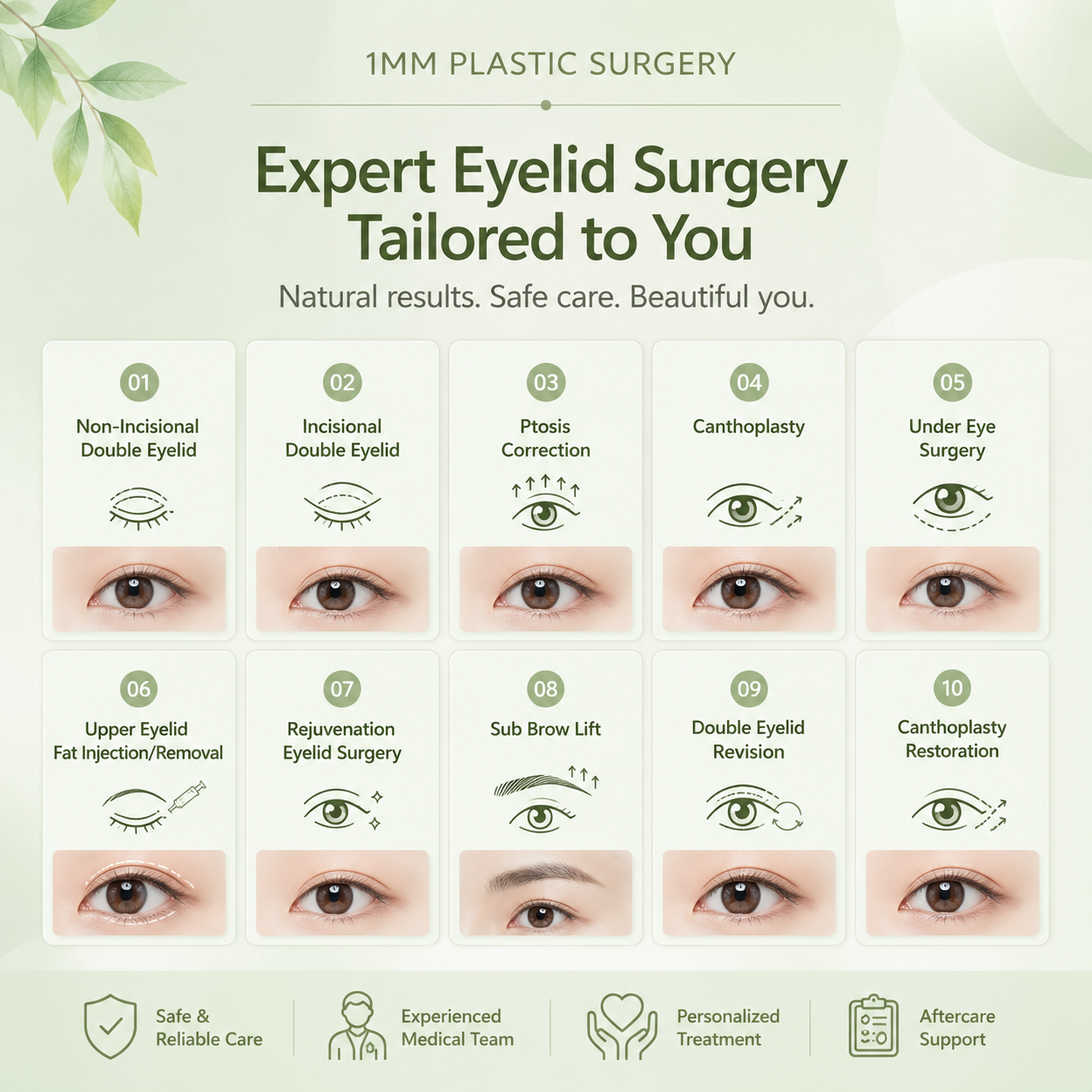
Incisional Upper Blepharoplasty
- Permanent incision along the eyelid crease
- Allows precise skin and fat removal
- Suitable for moderate to severe sagging
- Long-lasting, predictable results
Non-Incisional or Minimal Incision Methods
- Small incisions or buried sutures
- Less downtime and faster recovery
- Best for younger patients with minimal excess skin
Your surgeon will determine the most appropriate method after evaluating eyelid anatomy and muscle strength.
Why Patients Choose Korea for Upper Blepharoplasty
Upper eyelid surgery in Korea is favored for several reasons:
- Surgeons with extensive experience in eyelid anatomy
- High surgical volume with refined techniques
- Emphasis on natural, symmetrical eyelid creases
- Lower costs compared to the US or Europe
- Efficient recovery protocols for international patients
Korean surgeons are particularly skilled at avoiding overdone or overly Westernized eyelid results.
Recovery Timeline
Recovery from upper blepharoplasty is generally straightforward.
- Days 1–3: Swelling and mild bruising peak
- Days 5–7: Stitches removed (if incisional method used)
- 1–2 weeks: Most visible swelling subsides
- 1 month: Eyelid shape becomes more natural
- 3 months: Final results settle
Many international patients plan to stay in Korea for 5–7 days post-surgery.
Who Is a Good Candidate?
Upper blepharoplasty may be suitable if you have:
- Droopy or sagging upper eyelids
- Excess eyelid skin affecting vision
- Heavy-looking eyes due to aging
- Uneven or poorly defined eyelid creases
Patients with muscle weakness may require ptosis correction, which should be assessed during consultation.
Important Considerations for Foreign Patients
Before undergoing upper blepharoplasty in Korea, consider:
- Clear explanation of incision placement and crease height
- Whether ptosis correction is necessary
- Expected downtime and scar care
- Follow-up availability after returning home
Choosing an experienced eyelid surgeon is more important than focusing solely on price.
Final Thoughts
Upper blepharoplasty in Korea offers a strong balance of affordability, surgical precision, and natural results. Whether for cosmetic enhancement or functional improvement, the procedure is widely performed with high patient satisfaction.
For long-term eyelid improvement and refreshed eye appearance, upper blepharoplasty remains one of the most effective eyelid surgeries available in Korea.